If you’re thinking about moving to Queens or visiting the borough, the safety question is probably on your mind. Let me give you the straight answer right away:
Yes, Queens is generally safe. It ranks as one of the safer boroughs in New York City, with crime rates lower than Manhattan, the Bronx, and Brooklyn. Only Staten Island has lower crime numbers.
But here’s the thing: Queens has over 2.4 million residents living in 90+ different neighborhoods. Safety varies significantly depending on where you are. Some neighborhoods are incredibly safe with crime rates below the national average, while others need more caution.
In this guide, I’ll break down the real safety statistics, show you which neighborhoods are safest, and give you the facts you need to make an informed decision.
The Overall Safety Picture: What the Numbers Say
Let’s start with the hard data from 2024-2025.
Queens Crime Statistics
According to the latest NYPD CompStat data and crime analysis reports:
- Overall crime rate: 23.39 crimes per 1,000 residents
- Safety grade: B+ (safer than 72% of U.S. counties)
- Your chance of being a crime victim: About 1 in 48
- Violent crime rate: Lower than the NYC average
- Property crime rate: 17.06 per 1,000 residents (slightly below the national median)
Recent Trends
The good news? Crime in Queens has been dropping.
NYPD reports show that major crime categories like burglaries and robberies decreased in 2025 compared to 2024. Overall crime in NYC fell by 3%, with significant drops in shootings and murders from pandemic-era peaks.
What Does This Actually Mean?
Queens is safer than most large American cities. When you compare it to other urban areas of similar size across the country, Queens actually performs better than average.
The serious crime rate in Queens is 10.8 per 1,000 residents, compared to the city average of 14.2. That means Queens is below the New York City average for serious crimes.
Understanding What Those Numbers Really Mean
Here’s something important that most crime reports don’t explain: crime statistics can be misleading if you don’t understand the context.
High-Traffic Areas Look Worse Than They Are
Queens has two major airports (JFK and LaGuardia), 129 parks, and countless shopping districts. These areas show higher crime rates on maps because:
- More people means more opportunities for crime
- Few people actually live near these areas
- The crime rate is calculated per resident, not per visitor
So when you see a “red zone” on a crime map near the airports or around major shopping areas, it doesn’t mean the neighborhood is dangerous for residents. It means more people pass through there.
East Queens vs. Northwest Queens
According to CrimeGrade.org data:
- East Queens: The safest part, with a 1 in 47 chance of being a victim
- South Queens: 1 in 42 chance
- Northwest Queens: Higher reported incidents due to commercial areas
The northeast part of Queens sees only about 2,795 crimes annually, while the northwest sees around 14,283 crimes per year. But again, northwest Queens has major commercial zones, transit hubs, and business districts that drive those numbers up.
The Safest Neighborhoods in Queens (2025 Data)
If safety is your top priority, these are the neighborhoods you should look at:
1. Forest Hills
Violent Crime Rate: 1.8 per 1,000 residents (citywide average is 5.5)
Forest Hills is often called “the suburb in the city.” It has tree-lined streets, beautiful Tudor-style homes, and a real sense of community. Crime rates here are well below both the national and NYC averages.
Why it’s safe: Residential character, active neighborhood watch, strong police presence, and mostly families and long-term residents.
What you’ll find: Excellent schools, easy access to Manhattan via the E, F, M, and R trains, beautiful Forest Park, and great restaurants.
2. Bayside
Bayside consistently ranks as one of the safest neighborhoods not just in Queens, but in all of New York City.
Why it’s safe: Covered by the 111th Precinct (one of the lowest crime precincts), active community boards, coastal location with primarily single-family homes, and a tight-knit community.
What you’ll find: Top-rated public schools, Alley Pond Park (655 acres), waterfront access, family-oriented atmosphere.
Crime rate: Among the lowest in NYC. Many residents say they feel comfortable walking at any time of day or night.
3. Douglaston and Little Neck
These neighboring areas on the eastern edge of Queens (bordering Nassau County) are almost suburban in feel.
Why they’re safe: Detached homes, close-knit community, heavy involvement from local leaders, consistent police patrols.
Crime stats: Fewer than 50 serious crimes reported annually in these areas. The NYPD’s 111th Precinct has ranked this zone among the lowest for crimes for over 5 years straight.
4. Bellerose
Bellerose might not be as well-known, but locals know it’s incredibly safe.
Why it’s safe: Small size (lower population means fewer issues), borders Long Island (giving it a suburban layout), active community participation.
Crime rate: Fewer than 10 reported serious crimes annually.
5. Kew Gardens
A quiet, residential neighborhood with low crime rates and a suburban feel.
Why it’s safe: Well-maintained homes, family-oriented community, good schools, strong neighborhood associations.
6. Middle Village
Another family-friendly neighborhood with a strong sense of community and low crime.
7. Whitestone
Quiet, residential streets with active civic engagement and low crime statistics.
Other Safe Areas:
- Laurelton
- Glen Oaks
- Fresh Meadows (named NYC’s safest neighborhood by the New York Post in 2022)
- Auburndale
Neighborhoods Where You Should Be More Careful
I want to be honest with you. Not every part of Queens is equally safe.
Jamaica
Jamaica has higher crime rates than the Queens average, especially around:
- Transit hubs (Jamaica Center, Sutphin Boulevard stations)
- Commercial areas
But here’s the nuance: Many residential sections of Jamaica are calm and improving. There’s a strong community presence and ongoing redevelopment. Just exercise typical city awareness, especially at night.
Parts of Flushing
Flushing has higher crime stats in some areas, but like Jamaica, it’s home to thriving communities and major commercial activity. The numbers are inflated by the sheer volume of people shopping and doing business there.
Woodside
Generally safe with crime levels close to the Queens average. It’s busy around subway hubs but quiet and family-friendly on residential side streets.
Some Parts of Astoria
Astoria is overall considered safe, but it has busier nightlife spots where petty theft can occur. Stay aware of your surroundings, especially late at night in bar/club areas.
Is It Safe to Walk in Queens at Night?
This is one of the most common questions I get.
The short answer: Yes, it’s generally safe to walk in most parts of Queens at night, especially in the neighborhoods I mentioned above.
The longer answer: It depends on the neighborhood and your specific location.
Where Night Walking Is Generally Safe:
- Residential areas in Forest Hills, Bayside, Douglaston, Bellerose
- Well-lit main streets in most neighborhoods
- Areas with consistent foot traffic
- Near restaurants and businesses
General Night Safety Tips:
- Stick to well-lit streets – Avoid dark, empty blocks
- Stay in areas with other people – The busier, the better
- Keep your phone charged – But don’t walk while staring at it
- Trust your instincts – If something feels off, it probably is
- Use ride-sharing for long distances – Don’t walk 30 minutes through unfamiliar areas at 2 AM
According to residents and visitor reviews, many Queens neighborhoods have people walking dogs, jogging, and going about their business well into the evening. That’s usually a good sign.
Queens vs. Other NYC Boroughs: How Does It Compare?
Let’s put Queens in context with the rest of New York City.
2024 Crime Statistics by Borough:
1. Staten Island (Safest)
- 3,453 total crimes
- Population: 490,687
- Crime per person: Very low
2. Queens (Second Safest)
- 27,887 total crimes
- Population: 2,252,196
- Safer than Manhattan, Bronx, and Brooklyn
3. Brooklyn
- 30,753 total crimes
- Population: 2,561,225
- About the same as Queens overall
4. Manhattan
- 31,387 total crimes
- Higher crime density due to tourist areas and business districts
5. The Bronx
- 30,223 total crimes
- Historically higher crime, though improving significantly since the 1990s
The Bottom Line:
Queens is safer than Manhattan, the Bronx, and Brooklyn. It’s roughly on par with Brooklyn’s safety level but generally has more suburban, residential neighborhoods versus Brooklyn’s denser urban feel.
What Tourists and Visitors Need to Know
Planning to visit Queens? Here’s what you should know about safety.
Queens Is Tourist-Friendly
Queens attracts millions of visitors each year for:
- US Open (tennis tournament in Flushing)
- Citi Field (Mets baseball)
- Museum of the Moving Image in Astoria
- Incredible international food scene
- JFK and LaGuardia airports
Tourist areas are generally very safe. You’ll find:
- Good police presence
- Lots of people around during the day
- Well-maintained public spaces
Tourist Safety Tips:
- Stick to main areas – Astoria, Flushing, Long Island City, Forest Hills
- Use official transportation – Yellow cabs, Uber/Lyft, subway
- Don’t flash expensive items – This is basic city smarts anywhere
- Keep valuables secure – Use hotel safes, don’t leave bags unattended
- Ask locals for recommendations – Queens residents are generally friendly and helpful
Most tourists visiting Queens report feeling safe and welcome. The borough’s diversity means you’ll hear dozens of languages and see people from all over the world—it’s one of the most internationally diverse places on Earth.
Why Crime Maps Can Be Misleading
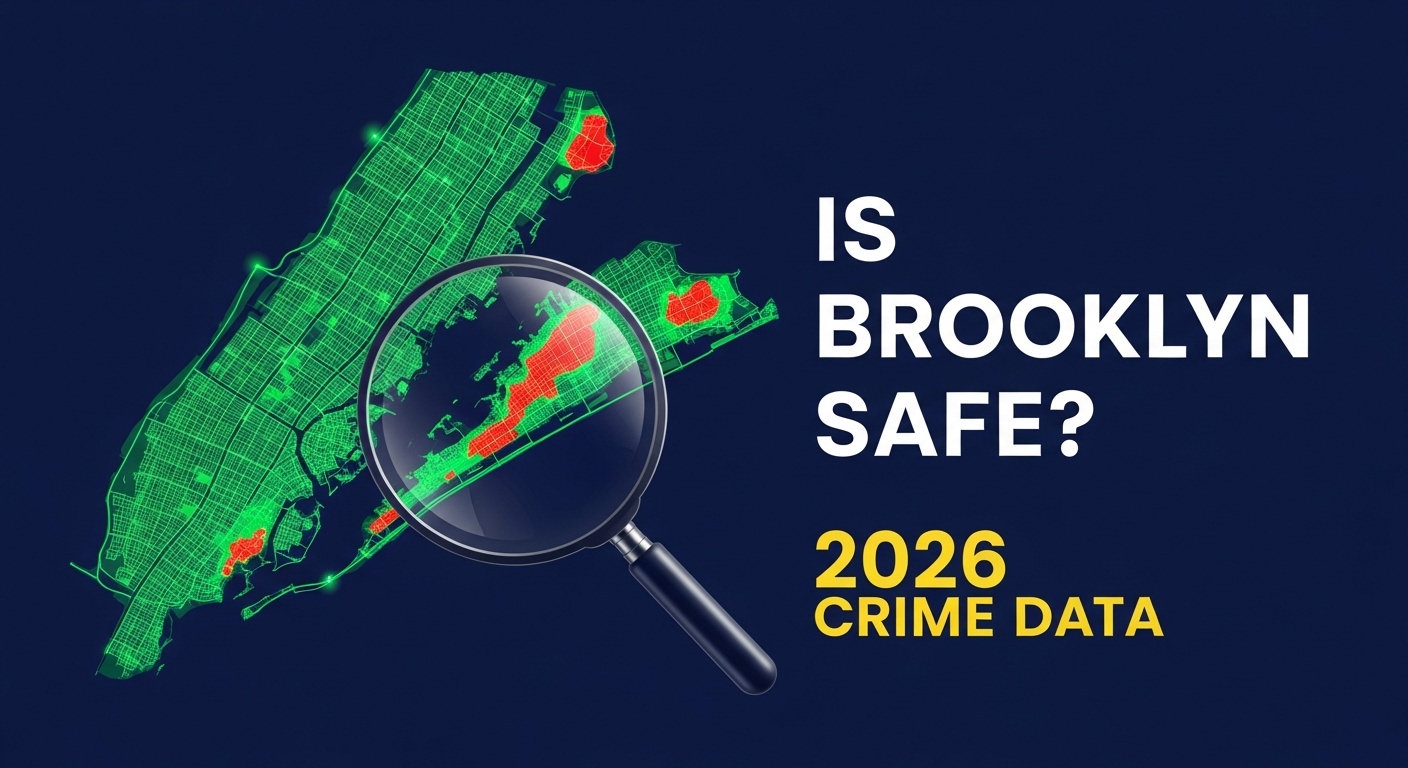
Before you panic about red zones on crime maps, understand this:
Airports Are Always Red
JFK and LaGuardia always show up as “high crime” on maps because:
- Tens of thousands of people pass through daily
- Very few people live nearby
- Crime per capita looks artificially high
This doesn’t mean the neighborhoods near airports are dangerous.
Parks and Shopping Districts
The same goes for:
- Flushing Meadows-Corona Park
- Jamaica Center shopping area
- Astoria shopping districts
- Any major retail corridor
More people = more reported incidents. But that doesn’t mean residents are unsafe.
What to Look At Instead:
Instead of just crime maps, look at:
- Type of crime: Is it mostly property crime or violent crime?
- Time of day: When do incidents occur?
- Specific location: Is it in a residential area or commercial hub?
- Trends over time: Is crime going up or down?
Resources like NeighborhoodScout and CrimeGrade.org provide context beyond just red and green zones.
The Diversity Factor: Queens Is the Most Diverse County in America
Here’s something special about Queens: it’s literally the most ethnically diverse urban area in the world.
Over 800 languages are spoken here. You can find authentic food from nearly every country on Earth. Neighborhoods have distinct cultural identities:
- Astoria: Greek and Middle Eastern communities
- Flushing: Large Asian population
- Jackson Heights: South Asian and Latin American communities
- Corona: Diverse Hispanic communities
What does this mean for safety?
Strong, tight-knit ethnic communities often have lower crime because:
- People know their neighbors
- Community organizations are active
- Local businesses create eyes on the street
- Cultural values often emphasize family and community safety
Many longtime Queens residents say the diversity is one of the borough’s greatest strengths, creating neighborhoods where people look out for each other.
External Resources for Queens Safety Data
If you want to dig deeper into the numbers, here are the most reliable sources:
- NYPD Crime Statistics – Official NYPD data updated monthly with precinct-level crime stats for all of Queens.
- NeighborhoodScout Queens Crime Data – Comprehensive analysis with comparisons to national averages and detailed breakdowns by crime type.
- CrimeGrade.org Queens Analysis – Interactive crime maps with cost of crime analysis and safety grades for different areas.
The Final Verdict: Is Queens Safe?
Let me summarize everything into a clear answer:
Yes, Queens is safe for most people in most neighborhoods most of the time.
More specifically:
✅ Queens is safer than:
- Manhattan
- The Bronx
- Brooklyn
- Most major American cities of comparable size
✅ Neighborhoods like Forest Hills, Bayside, Douglaston, and Bellerose are:
- Among the safest in all of NYC
- Comparable to suburban safety levels
- Great for families, retirees, and young professionals
✅ Overall Queens statistics:
- Crime rates below NYC average
- Decreasing crime trends
- B+ safety grade nationally
⚠️ Things to remember:
- Safety varies by neighborhood
- Areas like Jamaica need more caution
- Commercial and transit areas have higher reported crime but aren’t necessarily dangerous for residents
- Standard city awareness is always important
Who should feel safe in Queens?
- Families looking for good schools and community
- Young professionals seeking affordable NYC living
- Retirees wanting suburban feel with city access
- Tourists visiting major attractions
- Anyone looking for diverse, culturally rich neighborhoods
Bottom line: Over 2.4 million people live in Queens safely every day. The borough offers an excellent balance of safety, affordability, diversity, and access to everything New York City has to offer.
If you pick the right neighborhood (and I’ve given you the list above), you can live in Queens with confidence.
Thinking About Selling Your Queens Property?
Whether you’re relocating out of Queens or just looking to move to a different neighborhood, selling your property doesn’t have to be complicated.
123 We Buy House specializes in helping Queens homeowners sell quickly and easily:
Why Work With Us:
- Fast cash offers within 24-48 hours
- Buy houses in any condition (no repairs needed)
- Close on your timeline (as fast as 7 days)
- No real estate agent commissions
- Handle all paperwork and legal details
We Buy Properties In:
- All Queens neighborhoods
- Any condition (need repairs, fire damage, inherited homes)
- Any situation (divorce, foreclosure, relocation, probate)
Understanding the probate process in NY can be complex if you’ve inherited a Queens property. We can help navigate that process and make a fair cash offer quickly.
Wondering who pays closing costs when selling? We cover all closing costs, so you keep more money in your pocket.
Want to sell your house fast in New York? Read our expert guide on the fastest ways to sell your Queens property in 2026.
Get your free, no-obligation cash offer today and see how easy selling your Queens home can be.
Final Thoughts
Queens is a safe, diverse, and welcoming borough with something for everyone. From the suburban charm of Bayside to the cultural richness of Flushing, from the artistic vibe of Astoria to the family-friendly streets of Forest Hills, Queens offers neighborhoods where you can build a life, raise a family, and feel secure.
The statistics back it up: Queens is one of the safer boroughs in NYC with improving crime trends and many neighborhoods ranking among the safest in the entire country.
Do your research, visit the neighborhoods that interest you, talk to residents, and trust the data. Queens is ready to welcome you home.