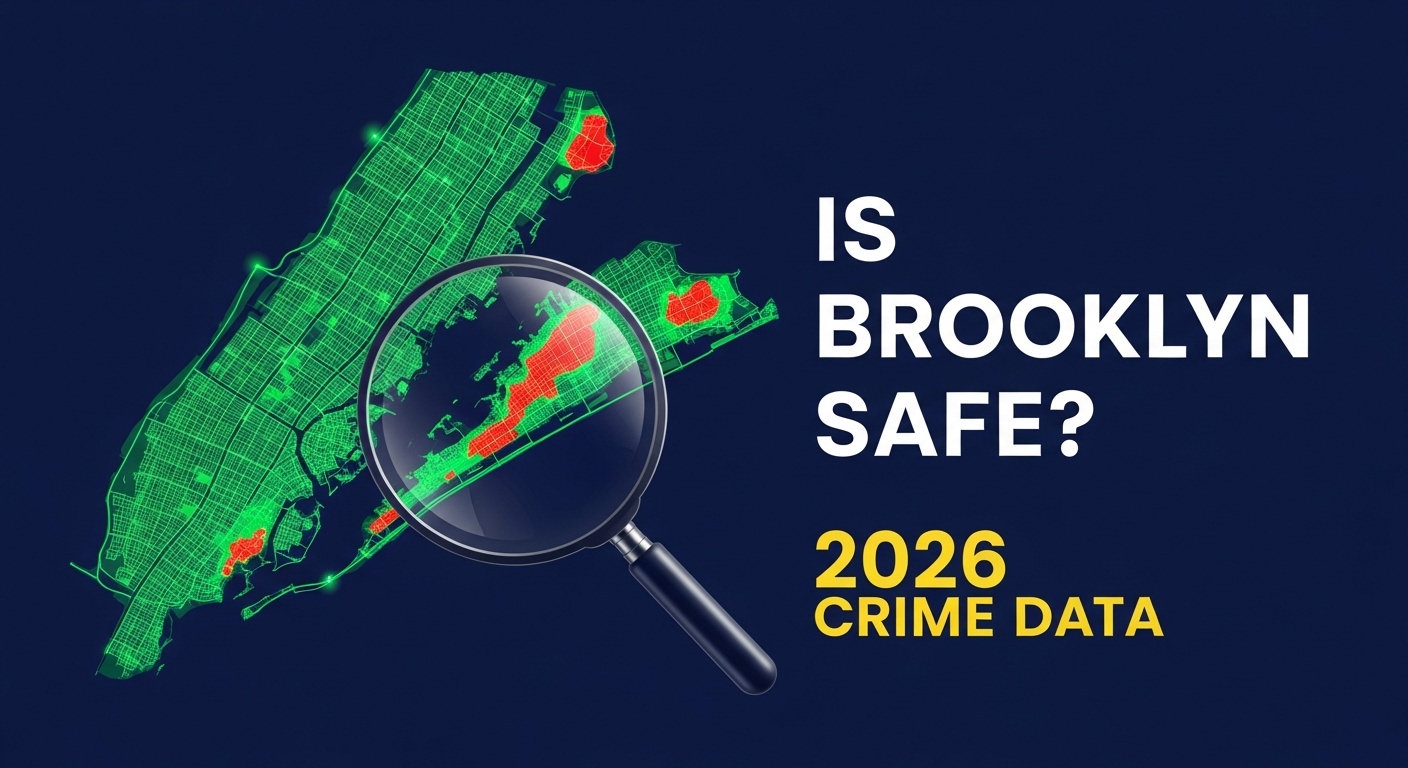
If you’re thinking about moving to Brooklyn or you’re already living here, you’ve probably asked yourself: “Is Brooklyn really safe?”
It’s a fair question. Brooklyn has a complicated reputation, everything from “dangerous” to “hipster paradise” depending on who you ask. The truth? Brooklyn in 2026 is safer than it’s been in decades, but like any place with 2.7 million people, the answer depends entirely on which neighborhood you’re talking about.
As real estate professionals who help people buy and sell homes throughout Brooklyn, we deal with safety questions every single day. We’ve put together this complete guide using the latest 2026 crime data, neighborhood-by-neighborhood breakdowns, and honest answers to help you make informed decisions.
The Big Picture: Brooklyn Just Had Its Safest Year in History
Let’s start with the headline news: 2025 was officially Brooklyn’s safest year on record, with a 25% drop in homicides and shooting homicides.
Brooklyn District Attorney Eric Gonzalez announced these historic numbers in January 2026. Here’s what actually happened:
Violent Crime Reductions in 2025:
- 91 murders (down 24% from 120 in 2024)
- 244 shooting incidents (down 15% from 287 in 2024)
- 307 shooting victims (down 11% from 347 in 2024)
- Retail theft down 20%, the largest decline among all NYC boroughs
- Burglaries down 8.6%
- Hate crimes down 10.8%
What This Means: Brooklyn has seen consistent improvement in safety for five years straight. Since 2020, homicides have dropped 48%, shootings declined 63%, and shooting victims fell 62%, making Brooklyn the only NYC borough where all three categories decreased over this period.
During 2025, Brooklyn experienced three separate 17-day periods without a single homicide and two 9-day stretches without a shooting victim.
The Reality Check: Yes, these numbers are impressive. But does that mean Brooklyn is “safe” for you? That depends on where in Brooklyn you’re talking about.
Understanding Brooklyn Crime Statistics: What the Numbers Really Mean
Before we dive into specific neighborhoods, you need to understand how to read crime statistics.
The Overall Brooklyn Crime Rate
Brooklyn’s crime rate sits at roughly 15-20 violent crimes per 1,000 residents annually, but this number hides massive variation between neighborhoods.
In 2022, Brooklyn reported an overall serious crime rate of 12.2 per 1,000 residents, comprising a property crime rate of 7.6 and a violent crime rate of 4.6.
Breaking This Down:
- If you live in Brooklyn, you have roughly a 1.2% chance of experiencing a serious crime in any given year
- Your actual risk varies wildly based on neighborhood, from under 0.5% in the safest areas to over 3% in the highest-crime areas
- Brooklyn ranks in the 25th percentile for safety, meaning it is safer than 25% of US cities but less safe than 75%
What Counts as “Crime” in These Statistics?
When you see crime statistics for Brooklyn, they typically include seven major categories:
- Murder – The most serious violent crime
- Rape – Sexual assault crimes
- Robbery – Theft using force or threat
- Felony Assault – Serious physical attacks
- Burglary – Breaking into buildings
- Grand Larceny – Theft over $1,000
- Grand Larceny Auto – Car theft
Recent Trends in Early 2026: In January 2026, major crime was up 1.5% compared to the same period in 2025, driven largely by theft. Specifically:
- Robbery up 8%
- Grand larceny auto up 15%
- Felony assault up 10%
- Burglary down 24%
This shows crime isn’t disappearing, it’s evolving. Car theft and street robberies are rising while home break-ins are falling.
The Cost of Crime in Brooklyn
Beyond just statistics, crime has real financial impact. In 2025, violent crime cost $513 per household in Brooklyn.
When you add in intangible costs like trauma and suffering, the total estimated cost of crime reaches $1.87 billion annually ($644 per resident).
How Brooklyn Compares to Other NYC Boroughs
Context matters. Is Brooklyn more dangerous than Manhattan? Safer than the Bronx?
Brooklyn vs. Other Boroughs
Brooklyn’s major crime rate is lower than the Bronx and Manhattan but higher than Queens and Staten Island.
2025 Murder Comparisons:
- Manhattan: down 33%
- Brooklyn: down 24%
- Bronx: down 18%
- Staten Island: down over 60%
- Queens: up 7%
What This Tells Us: Brooklyn is safer than it used to be, performing better than the Bronx but not as safe as Staten Island. Manhattan’s wealthier areas remain the safest parts of NYC.
Brooklyn vs. National Averages
Brooklyn performs better than national averages for cities of similar size.
However, Brooklyn’s violent crime rate is higher than the average US city, earning it a D+ safety grade from CrimeGrade.org.
The Truth: Brooklyn is safer than many American cities but still has higher crime than smaller towns or suburban areas. If you’re coming from a rural area, Brooklyn will feel less safe. If you’re coming from Chicago, Detroit, or Baltimore, Brooklyn will feel quite safe.
Neighborhood-by-Neighborhood Safety Breakdown
This is where it gets important. Park Slope and East New York might as well be different planets when it comes to crime statistics.
The Safest Brooklyn Neighborhoods
These neighborhoods consistently rank as the safest places in Brooklyn:
1. Bay Ridge
- One of Brooklyn’s safest areas
- Low violent crime rate
- Family-friendly atmosphere
- Strong community policing
- Well-lit streets and active nightlife
2. Brooklyn Heights
- Historic, wealthy neighborhood
- Very low crime rates
- Excellent police presence
- Safe at all hours
- Proximity to downtown Brooklyn courts and government buildings
3. Park Slope
- Park Slope has one of the lowest crime rates in Brooklyn
- Violent crime rate 38% lower than US average
- Family-oriented community
- Well-maintained parks and streets
- Active neighborhood watch programs
4. Dyker Heights
- Quiet residential area
- Low property crime
- Tight-knit Italian-American community
- Safe for walking at night
- Minimal street crime
5. Carroll Gardens
- Gentrified neighborhood with low crime
- Strong community ties
- Good street lighting
- Active local businesses
- Neighborhood associations promote safety
6. Cobble Hill
- Wealthy, low-crime area
- Historic brownstones
- Low violent crime
- Safe for families
- Excellent schools contribute to community stability
7. DUMBO (Down Under the Manhattan Bridge Overpass)
- High-income area with low crime
- Mostly residential and commercial
- Heavy foot traffic deters crime
- Well-patrolled by police
- Waterfront location with good visibility
Moderate-Safety Brooklyn Neighborhoods
These areas have mixed safety profiles, generally safe but with pockets requiring more caution:
8. Williamsburg
- Crime varies by specific location
- Northern areas safer than southern
- Gentrification has improved safety
- Nightlife areas can have issues late at night
- Package theft and bike theft more common
9. Bedford-Stuyvesant (Bed-Stuy)
- Rapidly gentrifying
- Safety improving significantly
- Western areas safer than eastern
- Still has higher property crime
- Community revitalization ongoing
10. Bushwick
- Mixed safety profile
- Northern Bushwick safer than southern
- Property crime more common than violent crime
- Improving due to young professional influx
- Some blocks still experience issues
11. Crown Heights
- Crown Heights experienced major decreases in violent crime in 2025
- Western Crown Heights safer
- Eastern areas have higher crime
- Gentrification changing safety profile
- Community organizations active in crime prevention
12. Sunset Park
- Diverse working-class neighborhood
- Moderate crime rates
- Property crime more common
- Safe during daylight hours
- Some areas better than others
13. Flatbush
- Large, diverse area with varying safety
- Crime rate around 8.8 incidents per 1,000 people
- Some pockets very safe, others less so
- Residential areas generally safer
- Commercial corridors require more awareness
Higher-Crime Brooklyn Neighborhoods
These neighborhoods have historically had higher crime rates, though many are improving:
14. Brownsville
- Historically highest crime area in Brooklyn
- Brownsville saw murders drop from 21 in 2024 to 7 in 2025, a 67% decrease
- Significant improvement but still elevated crime
- Public housing developments working on safety
- Community programs making real difference
15. East New York
- East New York has significantly higher crime than areas like Park Slope
- Elevated violent and property crime
- Improving but still challenging
- Affordable housing attracts residents despite safety concerns
- Community investment increasing
16. Canarsie
- Higher property crime rates
- Some gang activity present
- Varies significantly by specific blocks
- Waterfront areas generally safer
- Residential neighborhoods safer than commercial
17. East Flatbush
- Elevated crime compared to western Brooklyn
- Property crime more common
- Gang activity in some areas
- Many safe residential pockets
- Community working on improvements
18. Ocean Hill
- Higher violent crime rates
- Property crime elevated
- Improving with community programs
- Public housing developments addressing safety
- Still requires extra caution
Public Housing and Crime
Public housing developments saw even sharper crime declines: homicides down 41%, shootings down 31%, and shooting incidents down 32%.
This is significant because public housing often experiences higher crime rates than surrounding areas. The improvements show targeted policing and community programs are working.
Brooklyn Safety by Time of Day
When you’re in Brooklyn matters almost as much as where you are.
Daytime Safety (6 AM – 6 PM)
Generally Safe: Most Brooklyn neighborhoods are quite safe during daylight hours. You can walk around, use public transportation, and go about your business with minimal concern in all but the highest-crime areas.
What to Watch:
- Package theft peaks during work hours
- Bike theft common near subway stations
- Pickpocketing in crowded areas (especially near tourist spots)
- Car break-ins in parking lots
Evening Safety (6 PM – 11 PM)
Moderately Safe: The safety equation changes after dark, but not as dramatically as you might think.
Safer Evening Areas: Brooklyn Heights, Park Slope, Bay Ridge, Carroll Gardens, and DUMBO remain very safe in the evening with active restaurants, bars, and pedestrian traffic.
More Caution Needed: East New York, Brownsville, parts of Bed-Stuy, and Canarsie require more awareness after dark.
Tips for Evening Safety:
- Stick to well-lit, populated streets
- Use ride-sharing or cabs instead of walking alone
- Keep phone and valuables secured
- Stay aware of surroundings
- Travel in groups when possible
Late Night Safety (11 PM – 6 AM)
Exercise Caution: Late night is when most street crime occurs across all neighborhoods.
Higher Risk:
- Street robberies increase significantly
- Subway platforms can be isolated
- Fewer witnesses around
- Drunk individuals may cause problems in nightlife areas
Staying Safe Late Night:
- Use ride-sharing or cabs
- If using subway, stay in lit areas near booth
- Keep valuables hidden
- Don’t use phone while walking
- Trust your instincts, if something feels off, leave
Is the Brooklyn Subway Safe?
The subway is essential for Brooklyn living, but safety concerns are real.
Current Subway Safety Statistics
The NYPD made the subway the safest it’s been since 2009 (outside pandemic years), driving transit robberies to the lowest level ever.
What This Means: Subway safety has improved dramatically. You’re statistically very safe on the subway, though incidents still occur.
Subway Safety Tips
During Rush Hour (7-9 AM, 5-7 PM): Very safe due to crowds and police presence. This is the best time to ride.
Midday: Generally safe with moderate ridership.
Late Night: Higher risk. Stick to these rules:
- Wait near the conductor’s car (middle of platform)
- Stand near station booth if possible
- Don’t fall asleep on train
- Don’t use headphones, stay aware
- Move train cars if someone makes you uncomfortable
- Consider cab/ride-share instead after midnight
Station-Specific Concerns: Some stations are more isolated than others. High-traffic stations (Atlantic Terminal, Jay Street, Barclays Center) feel safer than end-of-line stops.
Common Brooklyn Crimes: What You Actually Need to Worry About
Let’s talk about what crimes actually happen in Brooklyn and how to avoid them.
Property Crimes (Most Common)
Package Theft: The most common crime in Brooklyn. Thieves follow delivery trucks and steal packages from doorsteps.
Prevention:
- Use delivery lockers
- Require signature on expensive items
- Install doorbell camera
- Ask neighbors to grab packages
- Ship to work if possible
Bike Theft: Extremely common, especially near subway stations.
Prevention:
- Use U-lock, not cable lock
- Lock frame and both wheels
- Bring bike inside whenever possible
- Register your bike
- Use GPS tracker
Car Break-ins: Common in all neighborhoods, especially overnight.
Prevention:
- Don’t leave anything visible in car
- Use steering wheel lock
- Park in garage if possible
- Install car alarm
Car Theft: Grand larceny auto is up 15% in early 2026, particularly for certain models.
Prevention:
- Install tracking device
- Use steering wheel lock
- Park in well-lit areas
- Avoid leaving car running
Violent Crimes (Less Common but More Serious)
Street Robbery: Robbery is up 8% in early 2026.
Most often involves theft of phones, wallets, or bags using intimidation or force.
Prevention:
- Don’t use phone while walking at night
- Keep valuables concealed
- Stay aware of surroundings
- Don’t resist if confronted, give them what they want
- Walk confidently in groups
Assault: Felony assault jumped 10% from 466 incidents in January 2025 to 516 in January 2026.
Most assaults involve people who know each other (domestic violence, disputes) rather than random attacks.
Prevention:
- Avoid confrontations
- Don’t engage with aggressive individuals
- Leave situations that feel unsafe
- Report domestic violence concerns
Hate Crimes
Hate crimes were up 20% in Brooklyn compared to the same period in 2025, with 12 total incidents reported.
While still relatively rare, certain communities face targeted harassment.
What to Do:
- Report all hate crimes to NYPD
- Contact local community organizations
- Document incidents
- Use buddy system in vulnerable situations
Special Situations: Brooklyn Safety for Different Groups
Different people face different safety concerns in Brooklyn.
Safety for Women
Specific Concerns:
- Catcalling and harassment common in some areas
- Higher perceived risk of assault
- Safety concerns when alone at night
Additional Precautions:
- Share location with trusted contacts
- Use safety apps (Citizen, Noonlight)
- Walk with keys between fingers
- Take self-defense class
- Trust your gut, if you feel unsafe, you probably are
Safety for LGBTQ+ Residents
The Reality: Brooklyn has many LGBTQ+-friendly neighborhoods, but harassment still occurs.
Safer Areas: Park Slope, Brooklyn Heights, Williamsburg, and DUMBO have large LGBTQ+ populations and are generally very welcoming.
Precautions:
- Be aware of surroundings in less-accepting areas
- Report hate crimes
- Connect with local LGBTQ+ organizations
- Know where nearby safe spaces are
Safety for Students
Common Issues:
- Bike theft near campuses
- Package theft at student housing
- Late-night walking after classes
- Scams targeting students
Student Safety Tips:
- Use campus security escorts when available
- Don’t walk alone late at night
- Keep bike inside dorm/apartment
- Beware of rental scams (verify properties before sending money)
- Keep laptop and phone secured
Safety for Tourists
Tourist Areas: Brooklyn Bridge, Coney Island, Prospect Park, DUMBO, and Williamsburg are generally very safe.
Tourist Concerns:
- Pickpocketing in crowded areas
- Scams (fake tickets, overpriced tours)
- Getting lost in unsafe neighborhoods
Staying Safe:
- Research neighborhoods before visiting
- Use official tours and transportation
- Keep valuables secured
- Don’t look lost, check maps inside businesses
- Stay in tourist-friendly areas
What’s Making Brooklyn Safer?
Brooklyn’s improving safety isn’t accidental. Several factors are driving the change:
1. Data-Driven Policing
The NYPD uses CompStat data to deploy officers where and when crime is most likely to occur. This precision policing has proven effective.
2. Community Engagement
The District Attorney’s Office hosted more than 30 community events, including crime-prevention seminars, food and toy giveaways, and holiday celebrations.
Building trust between police and communities makes everyone safer.
3. Gun Buyback Programs
Two gun buyback events removed more than 350 firearms from the streets in 2025.
Fewer guns in circulation means fewer shooting incidents.
4. Youth Intervention Programs
The office relaunched Project Restore, aimed at reaching gang-involved youth early and providing resources and support.
Breaking the cycle of violence before it starts has long-term benefits.
5. Retail Theft Crackdown
Focused enforcement on repeat offenders led to Brooklyn recording the city’s largest decline in retail theft, down 20%.
6. Economic Development and Gentrification
Controversial but effective: as neighborhoods gentrify, crime often decreases. New residents, businesses, and investment change neighborhood dynamics.
However, this displaces long-time residents and raises affordability concerns, a complex trade-off.
How to Stay Safe in Brooklyn: Practical Tips
Regardless of which neighborhood you’re in, these strategies reduce your risk:
General Safety Practices
1. Stay Aware
- Keep your head up, not buried in your phone
- Notice who’s around you
- Trust your instincts
- Don’t wear headphones or keep volume low
2. Secure Your Home
- Install quality locks on doors and windows
- Use doorbell camera
- Don’t advertise valuables
- Get to know your neighbors (they watch out for suspicious activity)
- Consider renter’s or homeowner’s insurance
3. Transportation Safety
- Use ride-sharing late at night instead of walking
- Stay in well-lit areas
- Keep car doors locked while driving
- Don’t leave valuables visible in car
4. Digital Safety
- Enable “Find My Phone” feature
- Use screen lock
- Back up important data
- Don’t use phone while walking in higher-crime areas
5. Financial Safety
- Don’t carry large amounts of cash
- Use credit cards over debit (better fraud protection)
- Monitor accounts for suspicious activity
- Don’t share personal information with strangers
What to Do If You’re a Crime Victim
If you experience a crime in Brooklyn:
1. Ensure Your Safety First Get to a safe location immediately.
2. Call 911 Report violent crimes, robberies, or emergencies immediately.
3. For Non-Emergency Crimes Call 311 or visit your local precinct to file a report.
4. Document Everything
- Take photos of damage or injuries
- Write down what happened while memory is fresh
- Get contact info from witnesses
- Save any evidence
5. Report to Your Insurance File claims for stolen or damaged property.
6. Seek Support Crime victim services are available:
- NYC Crime Victim Hotline: 866-689-HELP
- Safe Horizon: 212-577-7777
- Counseling and compensation programs exist
Should You Move to Brooklyn? The Safety Verdict
So after all this data, the big question: Is Brooklyn safe enough to live in?
The Honest Answer: Brooklyn in 2026 is statistically safer than it’s been in decades. For most people, in most neighborhoods, most of the time, Brooklyn is reasonably safe.
You Should Feel Comfortable Moving to Brooklyn If: ✓ You’re considering safer neighborhoods (Bay Ridge, Park Slope, Brooklyn Heights, etc.) ✓ You’re street-smart and take basic precautions ✓ You’re comfortable with urban living ✓ You understand your specific neighborhood’s safety profile ✓ You’re willing to invest in home security ✓ You can afford neighborhoods with lower crime rates
You Might Want to Reconsider If: ✗ You’re extremely risk-averse ✗ You’re only considering high-crime neighborhoods ✗ You’ve never lived in a city before ✗ You need to feel 100% safe at all times ✗ You’re not comfortable being aware of surroundings ✗ You’re not willing to take basic safety precautions
The Middle Ground: Most people adapt well to Brooklyn safety concerns. Yes, crime exists. Yes, you need to be more careful than in suburbs. But millions of people live happy, safe lives here.
Selling Your Brooklyn Home? We Can Help
If you’re considering leaving Brooklyn due to safety concerns, or for any other reason, we buy houses throughout Brooklyn in any condition.
Why Homeowners Work With Us:
✓ Fast Cash Offers – Get an offer within 24 hours ✓ No Repairs Needed – We buy houses as-is (learn more about selling your house as-is) ✓ Flexible Closing – Close on your timeline ✓ No Commissions – Direct sale means no agent fees ✓ Local Expertise – We understand Brooklyn neighborhoods and market conditions
Whether you need to sell your house fast in New York due to relocation, divorce, financial hardship, or simply want to move to a different area, we can help make the process quick and stress-free.
If you’re selling during a divorce, dealing with an inherited property, or need to sell in a slow market, we have experience handling complex situations.
The Bottom Line: Brooklyn Safety in 2026
Brooklyn is experiencing its safest period in recorded history. Crime has dropped dramatically over the past five years, with 2025 marking historic lows in murders, shootings, and many other crime categories.
However, Brooklyn isn’t uniformly safe. Crime varies dramatically by neighborhood, with rates swinging from under 200 incidents per 100,000 residents in some areas to over 1,500 in others.
The truth about Brooklyn safety:
- It’s improving: Every major crime category except a few theft-related offenses is down significantly
- It varies dramatically: Your neighborhood matters more than overall Brooklyn statistics
- It’s comparable: Brooklyn is safer than many large American cities but less safe than suburbs
- It requires awareness: You can’t be oblivious, but you don’t need to be paranoid either
- It’s about perspective: Coming from rural areas, Brooklyn might feel unsafe; coming from higher-crime cities, it’ll feel quite safe
Most people who live in Brooklyn love it and feel reasonably safe. The borough offers incredible culture, diversity, food, entertainment, and community, benefits that outweigh safety concerns for millions of residents.
The key is choosing the right neighborhood for your comfort level, taking sensible precautions, staying aware, and being smart about when and where you go.
Brooklyn in 2026 isn’t perfectly safe, no city is. But it’s safer than ever, improving yearly, and for most people, it’s absolutely safe enough to call home.
Looking to Move to or from Brooklyn?
We buy houses throughout Brooklyn and can provide neighborhood-specific insights on safety, property values, and market conditions. Contact us for a free consultation and cash offer within 24 hours.
Whether you’re concerned about safety, need to relocate quickly, or are facing any challenging home-selling situation, we’re here to help make your transition smooth and stress-free.
Additional Resources: