Are you looking for a great deal on a home in New York? Buying a foreclosed property might seem like the perfect opportunity to save thousands of dollars. But before you jump in, there’s a lot you need to understand about the foreclosure process, the risks involved, and how to protect yourself.
As real estate professionals who buy houses throughout New York, we’ve seen it all—the amazing success stories and the costly mistakes. This guide will walk you through everything you need to know about buying foreclosed homes in 2026, in plain English that anyone can understand.
What Is a Foreclosed Home?
A foreclosed home is a property that the bank has taken back from the owner because they couldn’t make their mortgage payments. When someone falls behind on their house payments, the lender eventually takes legal action to reclaim the property and sell it to recover their losses.
In simple terms: the homeowner couldn’t pay, the bank took the house back, and now they want to sell it to get their money back.
Why Are Foreclosed Homes Cheaper?
Banks aren’t in the business of owning houses—they’re in the business of lending money. When they end up with a property through foreclosure, they usually want to sell it quickly. This urgency can create opportunities for buyers to get properties below market value.
However, “cheaper” doesn’t always mean “better deal.” These properties often come with problems that can cost you thousands to fix. We’ll get into those risks later in this guide.
Understanding New York’s Foreclosure Process
New York is different from many other states. Here, foreclosures must go through the court system—this is called a “judicial foreclosure.” This process takes time, which can be good news for buyers who want to do their research.
The Timeline in New York
New York has the longest foreclosure timeline in the United States, typically lasting around 445 days. That’s over a year from when the process starts until the property is sold.
Here’s how the process typically works:
1. Homeowner Falls Behind (Months 1-4) When a homeowner misses payments, the lender first tries to work with them. Federal law requires mortgage servicers to contact borrowers within 36 days of a missed payment to discuss alternatives.
2. Pre-Foreclosure Notice (90 Days Before Filing) New York law requires lenders to notify homeowners at least 90 days before filing a foreclosure lawsuit. This notice tells the homeowner they’re in default and at risk of losing their home.
3. Foreclosure Lawsuit Filed (Months 4-7) The lender files a lawsuit in court. The homeowner has 20 days to respond if served in person, or 30 days if served by mail.
4. Settlement Conference New York requires both parties to attend a settlement conference to try to work things out before the foreclosure proceeds.
5. Court Judgment (Months 7-12) If no settlement is reached, the court issues a judgment allowing the foreclosure sale to proceed.
6. Foreclosure Auction (About 4 Months After Judgment) The foreclosure sale is usually scheduled about four months after the court enters judgment, with the notice of sale published in a newspaper once a week for at least four weeks before the sale.
The Three Types of Foreclosed Properties You Can Buy
Not all foreclosures are the same. Understanding the differences is crucial to making smart decisions.
1. Pre-Foreclosure Properties
These are homes where the owner has received a foreclosure notice but the property hasn’t been auctioned yet. The owner still legally owns the home.
Pros:
- You can negotiate directly with the homeowner
- Often get the best deals because owners are motivated
- Can inspect the property before buying
- May use traditional financing
Cons:
- Owners might be difficult to work with (they’re in a stressful situation)
- Deal might fall through if they work things out with the bank
- Requires sensitive negotiation skills
Real Estate Expert Tip: Pre-foreclosures can be the sweet spot for buyers. The homeowner wants to avoid foreclosure on their credit record, and you can get a property before investors crowd in at auction. However, approach with empathy—these are people in difficult situations.
2. Auction Properties
These are properties sold at public auction, usually at the county courthouse.
Pros:
- Potentially the lowest prices
- Fast process once you win
- No negotiation—highest bidder wins
Cons:
- Usually requires all cash payment within days
- Sold “as-is” with no inspection
- You rarely get to see inside the property
- Competing against experienced investors
- Previous owners might still be living there
- May have hidden liens or title issues
Real Estate Expert Tip: Auctions are not for beginners. We’ve seen first-time buyers get burned by buying properties with major problems they couldn’t see. If you’re considering an auction, work with an experienced real estate professional and have significant cash reserves for repairs.
3. Bank-Owned (REO) Properties
REO stands for “Real Estate Owned.” These are properties the bank has already foreclosed on and now owns directly.
Pros:
- Can inspect the property before buying
- Process similar to regular home purchase
- Can use traditional mortgage financing
- Title is usually clear of liens
- Property should be vacant
- Bank is motivated to sell
Cons:
- Not as cheap as auction properties
- May need significant repairs
- Banks can be slow to respond to offers
- Competition from other buyers
- Sold “as-is” with no warranties
Real Estate Expert Tip: REO properties are the best option for most buyers. You get many protections of a normal home purchase while still getting a discount. Banks price these fairly but are often willing to negotiate, especially if the property has been sitting for a while.
The Real Costs and Risks of Buying Foreclosures
Let’s be honest: buying a foreclosed home isn’t always the bargain it appears to be. Here are the hidden costs and risks you need to know about.
1. Property Condition Issues
Foreclosed homes are sold “as-is.” This means you’re buying whatever problems come with it.
Common Problems We See:
- Broken or missing appliances
- Roof damage
- Plumbing and electrical issues
- Mold and water damage
- Vandalism or theft
- Broken windows and doors
- HVAC systems that don’t work
- Foundation problems
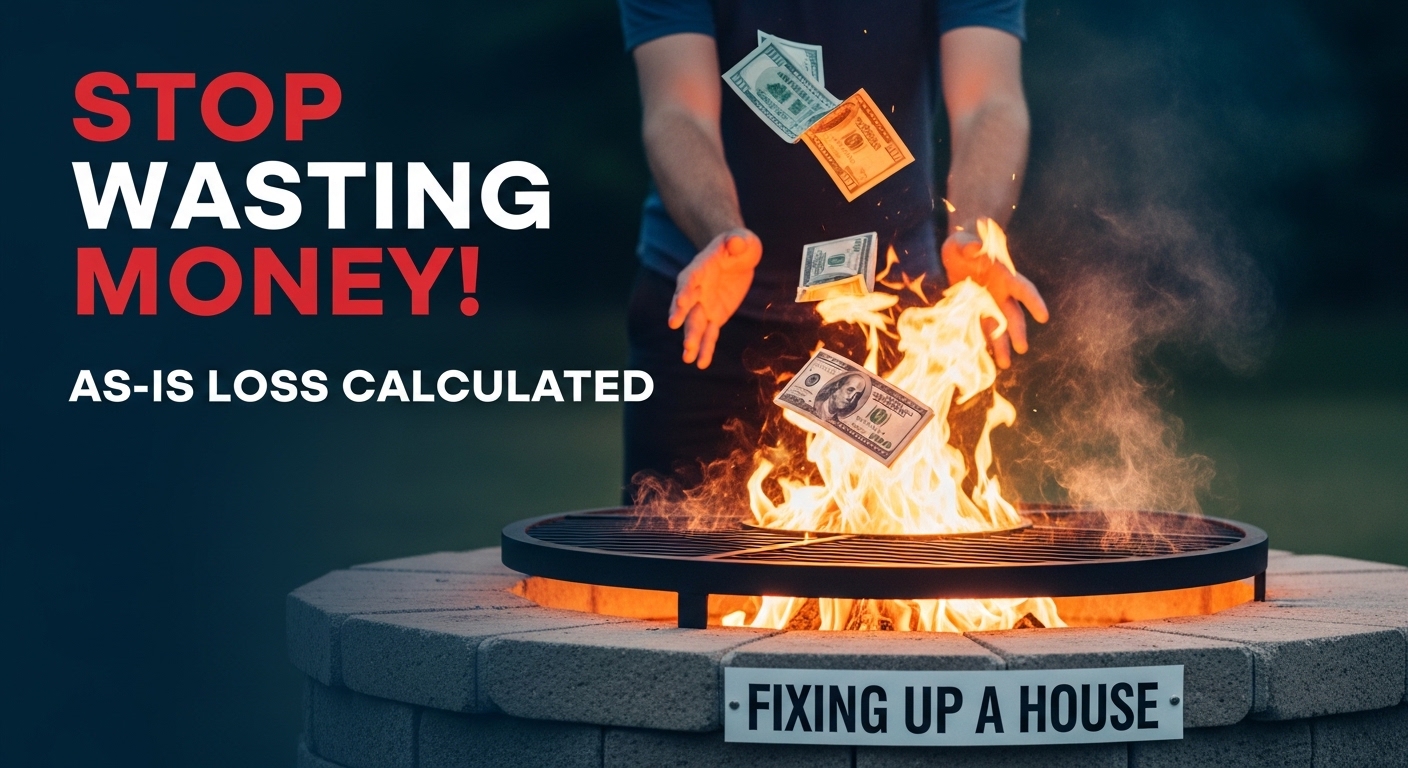
Real Cost: A property listed at $200,000 might need $50,000 in repairs. Suddenly, your “bargain” costs $250,000.
2. Previous Owners Still Living There
Some foreclosed homes are still occupied, and the people living there may not want to leave. You might need to start eviction proceedings, which takes time and money.
Real Cost: Legal eviction can cost $2,000-$5,000 and take several months. During that time, you can’t move in or rent it out.
3. Liens and Back Taxes
Some homes still have legal issues tied to them called liens, meaning someone claims the previous owner owes them money. If you buy the house and those liens weren’t cleared, you might be stuck with the bill.
Common Liens:
- Property tax liens
- HOA liens
- Mechanic’s liens (from unpaid contractors)
- Second mortgages
- Judgment liens
Real Cost: This varies widely but could be thousands or even tens of thousands of dollars.
4. No Seller Disclosures
In a normal home sale, sellers must disclose known problems with the property. With foreclosures, the bank doesn’t know the property’s history and isn’t required to tell you about issues.
5. Financing Challenges
Foreclosure auctions typically require buyers to pay in cash, but you can finance a pre-foreclosure or bank-owned property using a traditional home loan.
Many lenders are hesitant to finance foreclosures, especially if the property is in poor condition. You might face:
- Higher down payment requirements
- More stringent inspection requirements
- FHA 203(k) or other renovation loan requirements
- Higher interest rates
6. Limited or No Home Inspection
At auctions, you usually can’t inspect the property. Even with REO properties, the bank won’t make repairs based on inspection findings—it’s take it or leave it.
Step-by-Step Guide to Buying a Foreclosed Home in NY
If you’ve decided buying a foreclosure is right for you, here’s exactly how to do it successfully.
Step 1: Get Your Finances in Order
Before you even start looking:
- Check your credit score (aim for 620+ for traditional financing)
- Get pre-approved for a mortgage (if not paying cash)
- Save cash reserves for repairs (at least 10-20% of purchase price)
- Ensure you can access funds quickly if needed
For auction purchases, you’ll need proof of funds showing you have cash available, as foreclosure auction properties typically require buyers to pay in cash within just a few days.
Step 2: Find a Real Estate Agent with Foreclosure Experience
Not all real estate agents understand foreclosures. Work with someone familiar with the process who monitors foreclosure listings, understands auctions, and can help navigate challenges like liens or property damage.
Look for agents with certifications like CDPE (Certified Distressed Property Expert) or SFR (Short Sales and Foreclosure Resource).
Why This Matters: An experienced agent can help you avoid properties with serious problems and negotiate better deals with banks.
Step 3: Research and Find Properties
In New York, you’ll typically find the most foreclosures in counties like Oswego, Orleans, and Cayuga.
Where to Find Foreclosed Homes:
- Foreclosure.com and similar websites
- Local county clerk’s office
- Legal newspapers
- Court websites
- Real estate listing sites (filter for “foreclosure” or “REO”)
- Bank websites (many banks list their REO properties)
- Real estate agents specializing in foreclosures
Step 4: Do Your Homework on Each Property
This is the most important step. Don’t skip it.
Research Checklist:
✓ Title Search – Hire a title company to search for liens and title issues. This costs $200-$400 but can save you thousands.
✓ Property Tax Status – Check if property taxes are current. Back taxes become your responsibility.
✓ HOA Status – If there’s a homeowners association, check for unpaid dues.
✓ Neighborhood Analysis – Research crime rates, school quality, property values, and future development plans.
✓ Comparable Sales – Look at recent sales of similar homes in the area to ensure you’re getting a real deal.
✓ Drive By – At minimum, drive by the property multiple times at different times of day.
✓ Inspection – If possible, get a professional home inspection. Even if you can’t get inside, an inspector can identify major red flags from the exterior.
Step 5: Calculate Your True Costs
Use this formula:
Purchase Price + Estimated Repairs + Closing Costs + Carrying Costs = True Total Cost
Then compare this to the current market value of similar homes in good condition.
Example:
- Purchase Price: $180,000
- Estimated Repairs: $35,000
- Closing Costs: $5,000
- Carrying Costs (if it takes 3 months to renovate): $6,000
- Total Investment: $226,000
If similar renovated homes in the area sell for $280,000, you have potential profit or equity of $54,000. That’s a good deal. If they only sell for $230,000, you’re barely breaking even—not worth the risk and hassle.
Step 6: Make Your Offer
For REO Properties:
- Don’t lowball too much—banks know property values
- Submit all required documentation (pre-approval letter, proof of funds)
- Be patient—banks move slowly and multiple departments need to approve
- Consider offering more favorable terms (like flexible closing date)
- Include your mortgage pre-approval letter to show financing won’t fall through, and put as much money down as possible to signal you’re a serious buyer
For Auctions:
- Set a maximum bid and stick to it
- Bring required deposit (usually 5-10% in certified funds)
- Understand the auction rules completely
- Register to bid before the auction date
For Pre-Foreclosures:
- Work with the homeowner respectfully
- Offer to help them avoid foreclosure on their credit
- Be prepared to move quickly
- Have proof you can close
Step 7: Close the Deal
Once your offer is accepted:
- Hire a real estate attorney (highly recommended in NY)
- Complete final title search
- Secure homeowner’s insurance (some companies won’t insure foreclosures)
- Do final walkthrough if possible
- Bring certified funds to closing
- Receive the deed
Important: New York law doesn’t provide a redemption period for foreclosed homeowners after the sale, meaning they cannot reclaim their property once it has been sold.
Step 8: Plan for Repairs and Occupancy
After closing:
- Change all locks immediately
- Assess repair needs with contractors
- Get multiple quotes for major work
- Create a realistic timeline
- If previous owners are still there, consult with an attorney about proper eviction procedures
Common Mistakes Buyers Make (And How to Avoid Them)
Mistake #1: Falling in Love with the Price
You see a house listed for $150,000 that similar homes sell for $250,000. Seems amazing, right? But if it needs $120,000 in repairs, you’re not saving anything.
Solution: Always calculate true total costs before getting excited.
Mistake #2: Skipping the Title Search
Buying a property only to discover it has $30,000 in liens is a nightmare.
Solution: Always pay for a professional title search. It’s cheap insurance.
Mistake #3: Underestimating Repair Costs
First-time buyers often think, “I can fix that cheaply.” Then they discover fixing the foundation costs $40,000.
Solution: Get professional estimates. Add 20% buffer for unexpected issues.
Mistake #4: Not Understanding the Neighborhood
A cheap house in a declining neighborhood isn’t a bargain—it’s a trap.
Solution: Research thoroughly. Talk to neighbors. Visit multiple times.
Mistake #5: Competing at Auctions Without Experience
Auctions are fast-paced and competitive. First-timers often make emotional bids.
Solution: If you’re new to this, stick with REO properties or work with an experienced investor.
Mistake #6: Ignoring Carrying Costs
While you’re renovating, you’re paying property taxes, insurance, and possibly a mortgage.
Solution: Factor in all costs and move quickly once you own the property.
Should You Buy a Foreclosed Home? The Honest Answer
Buying a foreclosed home can be a great opportunity IF:
✓ You have cash reserves for repairs ✓ You’re willing to do thorough research ✓ You can handle stress and uncertainty ✓ You have time to manage renovations ✓ You’re patient with the process ✓ You’re working with experienced professionals
Buying a foreclosed home is probably NOT right for you if:
✗ You need to move in immediately ✗ You don’t have cash for unexpected repairs ✗ You’re uncomfortable with risk ✗ You want a move-in ready home ✗ You’re a first-time homebuyer with no renovation experience
Alternative Option: Sell Your Current House and Buy Move-In Ready
If you currently own a home and are considering buying a foreclosure, here’s something to think about: the time, stress, and money involved in buying and renovating a foreclosure might not be worth it.
The “We Buy Houses” Alternative
We buy houses throughout New York in any condition. Many people who considered buying foreclosures end up working with us instead for their next home purchase.
Here’s why:
Quick Sale of Current Home
- Get a cash offer within 24 hours
- Close on your schedule (as fast as 7 days)
- No repairs needed—we buy as-is
- No commissions or fees
- Avoid the uncertainty of the traditional market
Use Cash for Better Opportunities
- Having cash makes you a stronger buyer
- Negotiate better deals on move-in ready homes
- Avoid the stress of managing renovations
- Move into your new home immediately
Example: Instead of buying a $200,000 foreclosure that needs $50,000 in work and 6 months of your time, you could:
- Sell your current house to us for cash in 2 weeks
- Use that cash to buy a $250,000 move-in ready home
- Skip the renovation headaches
- Start enjoying your new home immediately
What About Investors?
If you’re an investor looking to buy, renovate, and sell or rent foreclosed properties, the equation is different. You need to run the numbers carefully:
For Flippers:
- Purchase Price + Repairs + Carrying Costs + Selling Costs < 70% of After-Repair Value
For Landlords:
- Monthly Rent Income – (Mortgage + Taxes + Insurance + Maintenance + Vacancy Reserve) = Positive Cash Flow
Many investors who started buying foreclosures found better returns by buying discounted properties directly from homeowners who need to sell quickly. That’s less competitive and often less risky than auctions.
New York Foreclosure Market in 2026: What to Expect
The foreclosure market in New York continues to evolve. Here’s what’s happening in 2026:
More REO Properties Available
Banks are working through backlogs, meaning more REO properties are hitting the market. This gives buyers more choices and potentially better deals.
Longer Legal Timelines
New York’s foreclosure laws continue to favor homeowner protections, meaning the process remains lengthy. This is good news for buyers who want time to research but can be frustrating if you’re trying to close quickly.
Competition from Investors
Institutional investors and cash buyers remain active in the foreclosure market. This means competition, especially for the best deals.
Rising Repair Costs
Material and labor costs remain elevated. When calculating repair estimates, use current pricing—not what renovations cost a few years ago.
Financing Options
Some lenders have created specialized programs for foreclosure purchases. Ask your mortgage broker about:
- FHA 203(k) loans (finance purchase and repairs)
- Fannie Mae HomePath program
- Freddie Mac HomeSteps program
- Local first-time buyer programs
Top Counties for Foreclosures in New York
In New York, you’ll typically find the most foreclosures in Oswego, Orleans, and Cayuga counties.
Why These Counties?
Oswego County:
- Economic challenges in some areas
- Mix of urban and rural properties
- Lower overall property values
Orleans County:
- Rural area with agricultural economy
- Affordable entry points
- Less competition from big investors
Cayuga County:
- Finger Lakes region
- Mix of small towns and rural areas
- Potential for value in vacation areas
Other Active Counties:
- Wayne County
- Monroe County
- Erie County
- Niagara County
Important New York Foreclosure Laws to Know
Foreclosure Abuse Prevention Act (FAPA)
This law provides additional protections for homeowners and affects how foreclosures proceed. It’s important for buyers to understand because it impacts timelines and legal processes.
Mandatory Settlement Conferences
New York requires settlement conferences where both parties must negotiate in good faith. This can delay the foreclosure process but also means properties have been thoroughly vetted by the court system before reaching auction.
No Redemption Rights
New York law doesn’t provide a redemption period for foreclosed homeowners after the sale. This means once you buy the property, the former owner can’t come back and reclaim it.
Working with Real Estate Professionals
When to Hire an Attorney
In New York, using a real estate attorney for foreclosure purchases is highly recommended and, in many cases, required. An attorney can:
- Review title search results
- Identify potential legal issues
- Handle closing documents
- Resolve lien problems
- Advise on eviction if needed
Cost: Usually $1,500-$3,000 for a foreclosure purchase.
When to Hire a Home Inspector
Even if you can’t get inside the property, hire an inspector to:
- Assess visible exterior issues
- Identify major red flags
- Estimate potential repair costs
- Check foundation and roof from outside
Cost: $300-$600 depending on property size.
When to Work with a Foreclosure Specialist
Consider working with someone who specializes in foreclosures if:
- You’re new to buying foreclosures
- You’re buying at auction
- The property has complex title issues
- You need help finding hidden foreclosure listings
The Bottom Line: Is Buying a Foreclosure Worth It?
Buying a foreclosed home in New York can absolutely be worth it—but only if you:
- Do extensive research – No shortcuts
- Calculate true costs – Not just purchase price
- Have cash reserves – For surprises (there will be surprises)
- Work with experts – Attorney, agent, inspector
- Stay patient – The process is slow
- Remain objective – Don’t fall in love with a property until you know the true costs
For many people, the time, stress, and risk involved in buying a foreclosure aren’t worth the potential savings. That’s okay. There are other ways to get a great deal on a home.
Better Alternatives for Many Buyers
If you’re currently a homeowner looking to move, consider:
1. Sell Your House for Cash We buy houses throughout New York in any condition. This gives you:
- Cash to make competitive offers on better properties
- Ability to close quickly on your next home
- No stress of timing two transactions
- No renovation headaches
2. Buy a Discounted Non-Foreclosure Many homeowners need to sell quickly for reasons other than foreclosure:
- Job relocation
- Divorce
- Inherited property they don’t want
- Downsizing
- Financial hardship
These motivated sellers often offer good deals without the complications of foreclosures.
3. Look for Fixer-Uppers from Regular Sellers Not every distressed property is a foreclosure. Regular sellers sometimes offer homes needing work at discounted prices—with fewer legal complications.
Ready to Make Your Move?
Whether you decide to buy a foreclosure or pursue other options, the key is making an informed decision based on your unique situation.
If you’re thinking about selling your current home to free up cash for your next purchase, we can help. We buy houses throughout New York:
✓ Fair cash offers within 24 hours ✓ No repairs needed—we buy as-is ✓ Close on your timeline ✓ No commissions or fees ✓ Local experts who understand the New York market
Why Sellers Work with Us:
Many people who planned to buy foreclosures ended up selling to us instead, taking their cash, and buying better properties without the renovation headaches.
The Smart Strategy:
- Get a quick cash offer on your current home
- Close fast and get your money
- Use cash to negotiate better deals on move-in ready homes
- Skip the stress of foreclosure complications
Final Thoughts
Buying a foreclosed home in New York in 2026 requires knowledge, patience, and careful planning. The opportunity for savings is real, but so are the risks.
This process involves courts, rules, deadlines, and paperwork, and a missed step can cost you time and money.
Remember:
- Do your research thoroughly
- Calculate true costs honestly
- Work with experienced professionals
- Have adequate cash reserves
- Be prepared for surprises
- Don’t rush into decisions
If the foreclosure route seems too complicated or risky for your situation, that’s perfectly okay. There are many paths to homeownership and building wealth through real estate.
The best decision is the one that matches your goals, timeline, and risk tolerance.
Need Help Selling Your Current House to Fund Your Next Purchase?
We buy houses in any condition throughout New York. Get a fair cash offer within 24 hours. No repairs, no commissions, no hassle.
Contact us today to discuss your options and take the first step toward your next home.